- What Sam's Reading
- Posts
- Favorite Reads from 2025
Favorite Reads from 2025
Laugh, cry, shed, recharge
Happy holidays! I didn’t reach my usual reading goal this year, but I had a few favorites.
Hitting my funny bone
A good friend recommended Remainder by Tom McCarthy to me more than a year ago. Like a dope, I waited until this past March to read it, and I just loved it. If you like the series The Rehearsal you should definitely give this one a try. 5 stars from me!
Feeling feelings, if you’re into that
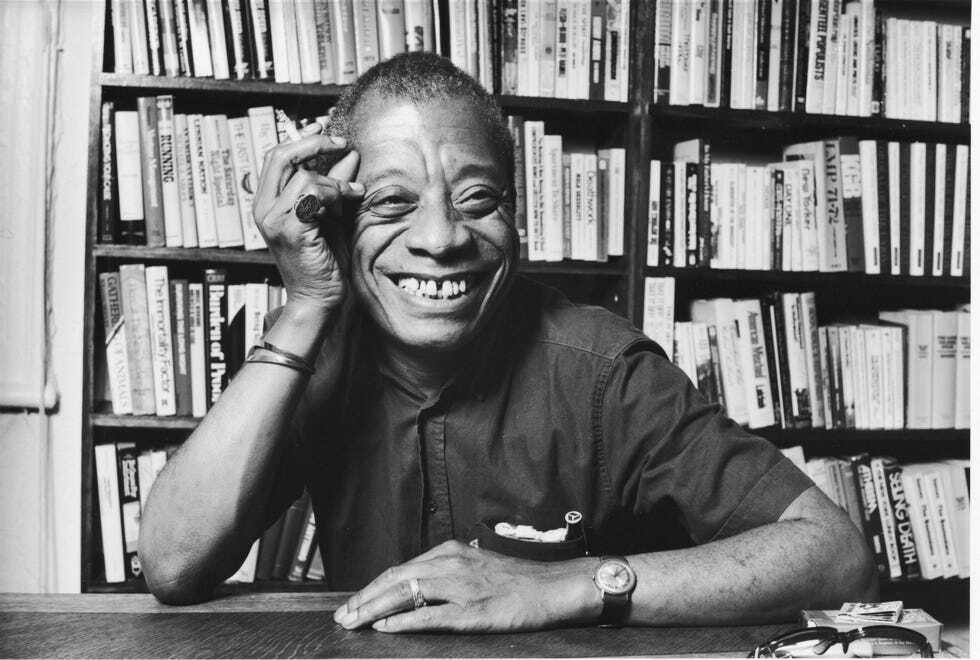
I think it was on TikTok that I saw someone say that our purpose on earth is to find the James Baldwin passage that hits you like a thunderbolt. I don’t know if I found it in Giovanni's Room, but I’m starting to believe this man had more insight into the human experience than any other 20th century author. Don’t wait!
Madonna in a Fur Coat by Sabahattin Ali gutted me emotionally, which probably should be embarrassing to admit, given how weak-willed the male protagonist is, but it remains true.
When women live alone

I wrote about deserts back in February. You’d think that all the sand and lack of modern amenities would make desert living “dirty,” but one theme I saw in those books and films, particularly Lawrence of Arabia, is how the desert is in fact cleansing or purifying in its sparseness. My train of thought here is that environments like dry deserts force you to prioritize survival to a degree that (some) aspects of human “society” are stripped away.
Surprisingly, gender, or (at least woman-ness?), may be one of those aspects; if, as Simone de Beauvoir says, "One is not born but becomes a woman,” can one unbecome a woman? I first picked up on this idea from interviews with female Russian WWII soldiers in The Unwomanly Face of War by Svetlana Alexievich, and I’ve been keeping my eye out for it ever since (gender as cage!). (I found this “shedding” imagery in my favorite body horror stories as well.)
Two books about women living in extreme dystopias without men, The Wall by Marlen Haushofer — a sort-of female Robinson Crusoe, of which there is a 2012 film adaptation — and I Who Have Never Known Men by Jacqueline Harpman, both explore this idea. I didn’t love either of them, but I don’t think I quite got the whole apple with either of them.
Extremely cozy reading propaganda
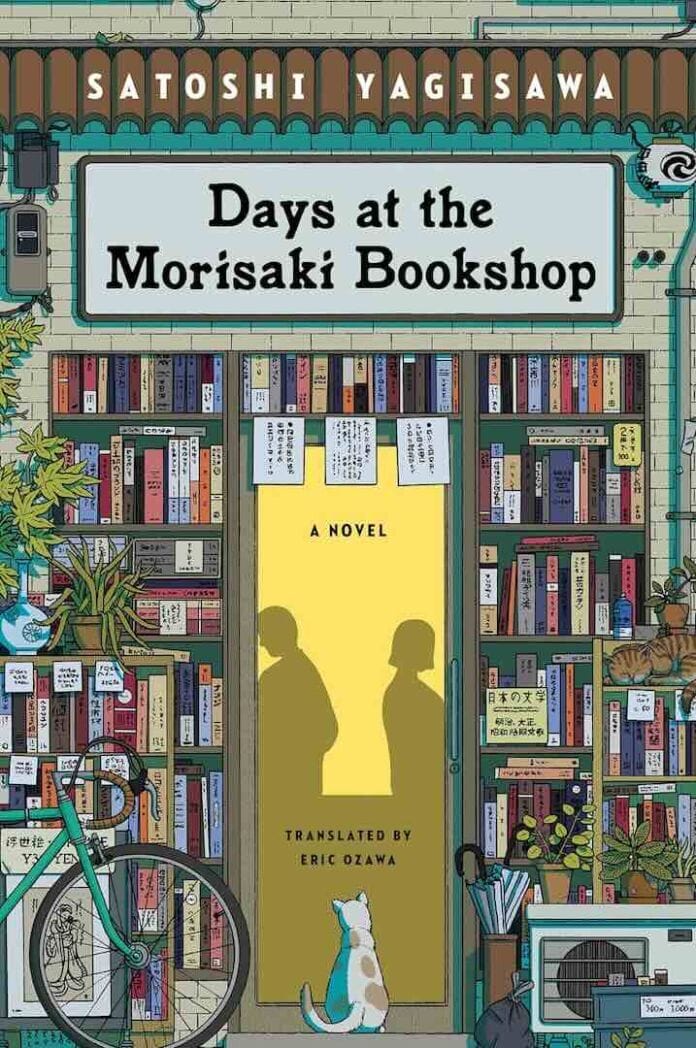
Reader, I would never leave
Days at the Morisaki Bookshop by Satoshi Yagisawa is extremely cozy pro-book, pro-reading propaganda that I wanted to curl up inside of. A great wintry/rainy day read. And there’s a sequel, which I’m saving for January/February (a.k.a. bleak winter). Pair with Perfect Days (2023)!
From le French
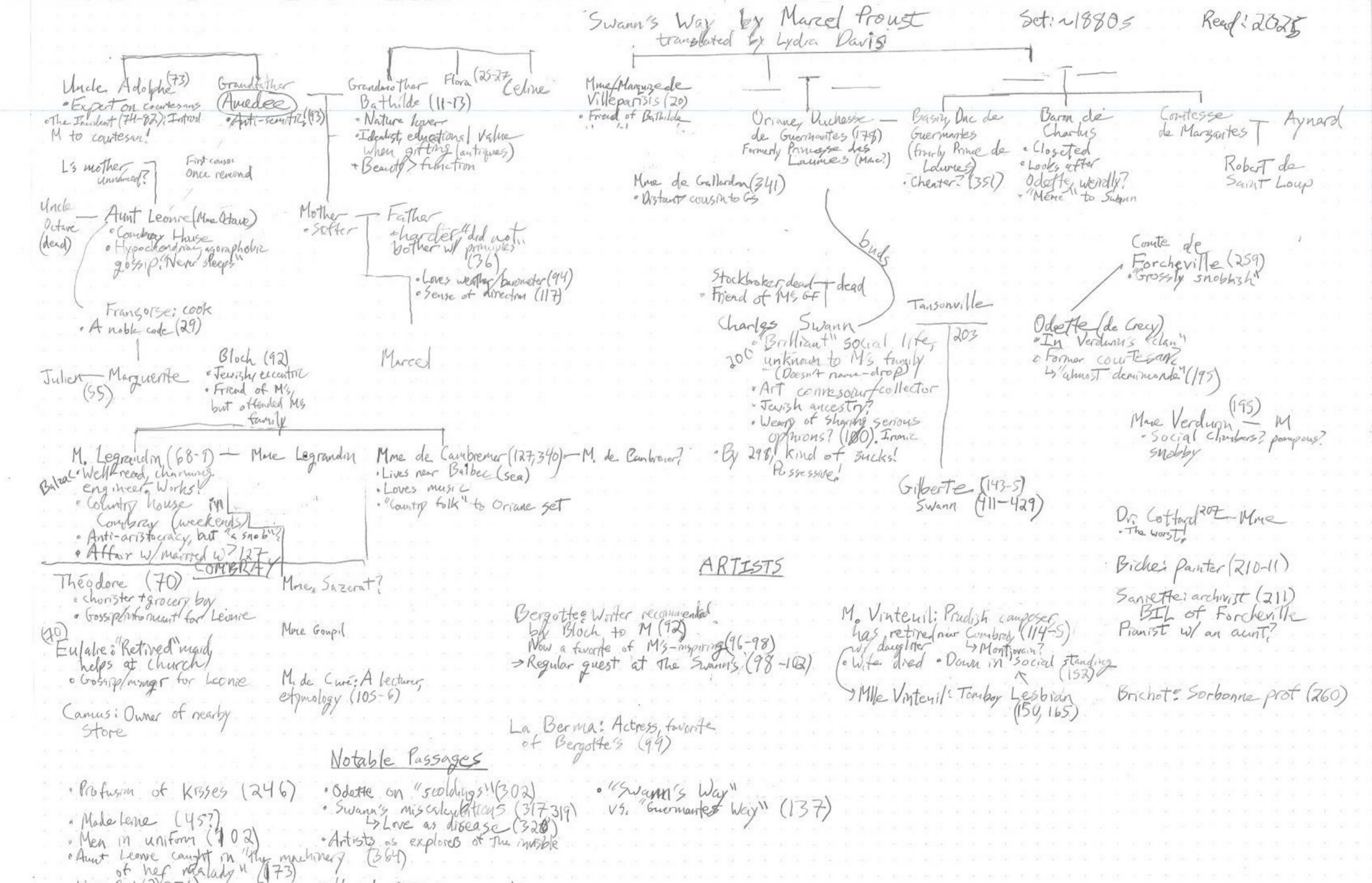
My character map of Swann’s Way from this year’s reading
Of the 30 French books I read this year, The Count of Monte Cristo by Alexandre Dumas, Nana by Émile Zola, and Les Misérables by Victor Hugo were the real stand-outs. And re-reading Swann’s Way by Marcel Proust, 17 years after my first time, was a real treat.
Non-fiction
The most immediately useful non-fiction book I read in 2025 has to be Ableism: The Causes and Consequences of Disability Prejudice by Michelle R. Nario-Redmond. As I’ve grown hesitatingly more confident that my body isn’t The Problem, I’ve become more interested in understanding ableism (how to spot it, deal with it, where it comes from, how to not internalize it, etc.).
Nario-Redmond presents tons of useful concepts from psychology to better understand ableism, such as justification ideologies, just world beliefs, and terror management theory.
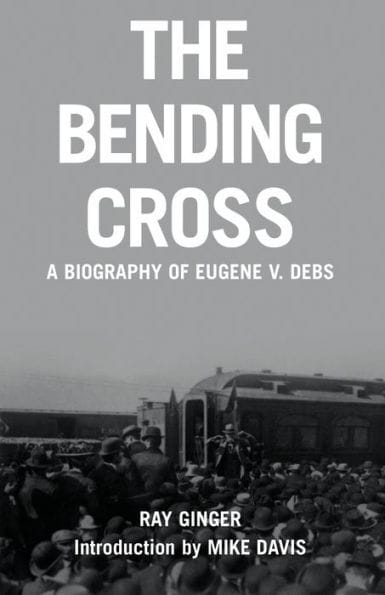
Didn’t learn about this guy in school!
The Bending Cross: A Biography of Eugene Victor Debs by Ray Ginger was a delightful surprise. Gene Debs: An American socialist but more importantly a great man. Pairs well with another insightful biography I read and wrote about later in the year called The Rebel's Clinic: The Revolutionary Lives of Frantz Fanon by Adam Shatz. (For movie pairings, try Norma Rae (1979) and/or the 1976 documentary Harlan County, USA.)
Lastly, I greatly enjoyed The Intellectual Origins of American Slavery: English Ideas in the Early Modern Atlantic World by my friend John Harpham. It’s about mostly English writers in the 1600s grappling with their countrymen increasingly engaging in the slave trade of the Atlantic world — Europe, Africa, and America. A thorough study that is sadly still relevant today.
Recently mentioned
Other favorites from this year include Convenience Store Woman by Sayaka Murata and Can the Monster Speak? by Paul B. Preciado, both of which I wrote about just last month. Still processing them, tbh.
Onward, to 2026!